ON RACIST STATUES AND MONUMENTS
George Floyd’s death should not promote knee-jerk decisions to erase history.
The cleverest detective is appreciative of clues left to solve a case. Without clues, the truth often gets hindered from examination or mistaken for another truth, and so the case goes unresolved and the victim’s complaint is never addressed. In the case of countless memorials depicting the atrocities of slavery in the United States, those representations are icons serving as lasting testimonials to the truth and should stand as permanent witnesses to the most violent crime against human beings in the recorded history of the earth.
The past three and a half years have proved to be banner years for overt racism in this country. While racism clearly existed prior to that time and, unfortunately, will continue on into the future, this recent period has ushered in its own pandemic of vitriolic poison reflective of former times when lynching was a regular occurrence and Black men, in particular, could be railroaded into dubious situations resulting in their deaths. In response, Black parents continue to preach their litany of self-preservation to their sons and daughters regarding what to and what not to do when accosted by the police, although law enforcement is not the only offender. Recent times have seen other “citizen” racist monsters openly engaged in heinous crimes that had been left collecting dust in their mental barns and forgotten by many of the rest of us, once again asserting their right to open the barn door to accuse, attack and kill Black people with no provocation and without remorse or condemnation. The damning accusatory factor becomes your black skin.
In the turbulent aftermath of a multitude of such aggressive racist acts as the murder of George Floyd, we often find ourselves seeking retribution and compensation to demonstrate our collective self-worth or to somehow appease the departed spirit, consequentially and regrettably making hasty actions that nullify our on-going cause. It becomes challenging to sort out a right action or right causes to embrace. What to do. Where to turn.
Without a doubt we are witnessing a time of change. We have lived through enslavement, Reconstruction, Jim Crow segregation, massacres in our own independent communities such as Tulsa, civil rights struggles, and are now facing a resurrection of the genocidal extermination of individual lives and liberty. It is no wonder that many would strike back by demanding the removal of anything having any semblance of acknowledgement to that ignominious past. However, we must be careful in our choice of action, lest we remove or destroy the evidence.
Young people in particular are calling for the removal of statues in various places. At times, the civic response is to abruptly respond; in others, there is much foot-dragging and pontification about the rights of the descendants of the criminals to continue to honor and revere their ancestors in public spaces. The civic response sometimes comes genuinely, but most often it comes to prevent damage to their precious memories or to appease those whom they know have a right to protest in order to prevent additional damage. The removal of statues is a just cause because these were constructed to glorify the criminals and to provoke fear and submission in the minds and hearts of Black people. The work being done in this area is laudable.
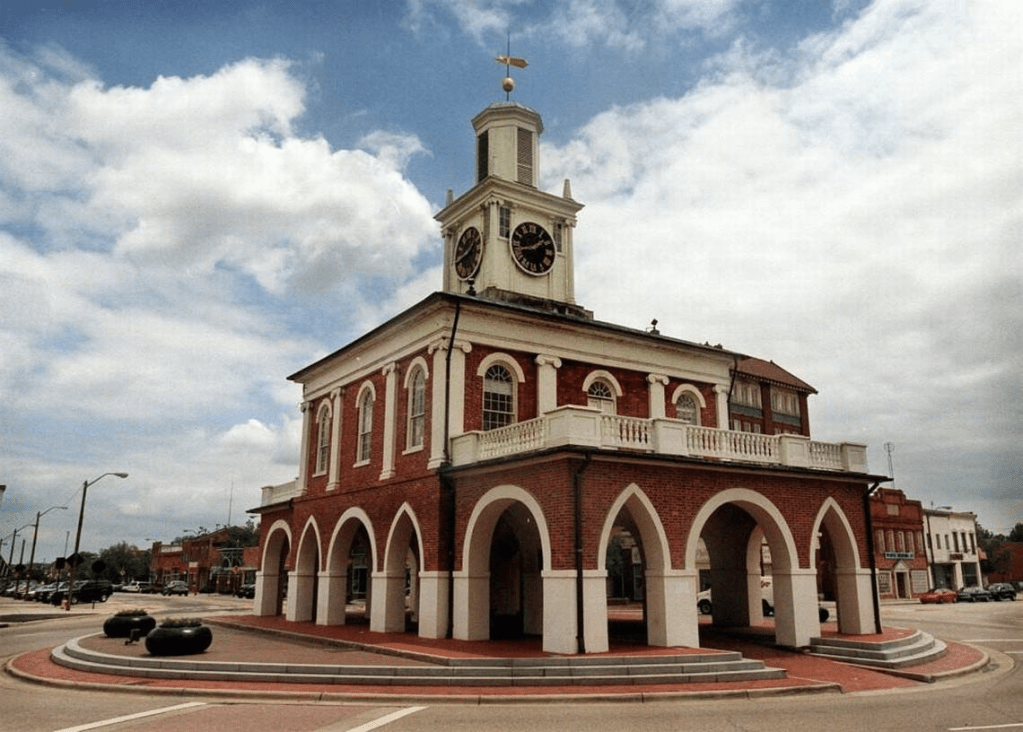
Yet others are also calling for removal of remnants of a past history that lay bare the crime. As we have become emboldened by our efforts and successes with statues, auction blocks such as Market House in Fayetteville, NC, for example, are now a target of our interest. It is here that I would caution Black people to stop and examine what this action entails.
The auction block, the dock where our ancestors landed, a plantation site, a cabin, a work tool, a restraint, a gravesite, all are a part of the evidence of the crime. These should never be destroyed and should instead remain as lasting reminders of the crimes to be actively used as tools of instruction in our struggle and for the proper education of our youth. They should remain as perpetual signals to continually examine the long-lasting effects of the crime. Monuments must be memorialized and catalogued so that those who come behind us are made more fully aware of the extent of the crime. Of what value to us is it if we collaborate in erasing our history? For if it is not there for us to study, we will assume that it did not exist, nor will we be able to discern its connection to the conditions of people of African descent in our lifetimes.
Instead, we must make valiant efforts in every village and hamlet, every city and town to ensure that our story remains visible to be told. I encourage those who are most affected to resist all efforts to destroy the evidence of the brutality of slavery, else the detective who follows us in 100 years will not know that a crime was ever committed in this place.
 RADIO GILLIE