Featured

FOR SUCKLINGS N0T FOR OOGLINGS

Two recent and one not-so-recent photos of three young women that I know and love have surfaced on social media, leaving me a bit shocked and bewildered due to their physical exposure and the fact that the photos are available for the world to see. Am I being foolish and old-fashioned?

In 2023, it seems that a non-nursing woman’s breasts are no longer thought of as sexual body parts designed to attract a sexual partner, but merely as body parts as common as your nose or your eyes to be viewed by everyone – but for what purpose?

I know this trend didn’t start in 2023; it’s probably been around for at least a hundred years by now, but it is more recent in the Black community that women have been deliberately exposing their breasts (and other body parts) in public display in the attempt to be seen as sexy. Why are we now so pre-occupied with sexiness? Are women following their own natural inclination, or simply following the lead of their idols who let it all hang out for the sake of satisfying the holder of the dollar? Is that the natural purpose of sexiness?

Some would criticize this behavior saying that the young women I referred to are calling attention to themselves by sharing their photos with the world on Facebook and that by doing so, they are likely to promote unwanted predatory responses. Such criticism would advise that this behavior be avoided for their own benefit. While unwanted attention is certainly a potential repercussion, I would argue that a deeper reason for a Black woman not baring her breasts to the world should be more personally relevant and more psychologically entrenched.

Imagine the year 1723, a mere 300 years ago. Imagine a ship being pulled into the harbor in Charleston, South Carolina containing your great ancestor mother who managed to survive the journey from the west coast of Africa to Barbados, then on to South Carolina. Imagine her journey on those ships being the target of rape and degradation. Imagine those perfect breasts being torn from the mouth of her hungry child who was then tossed aside like litter. Imagine those breasts being forced to suckle and feed her tormentor’s heinous desire.

Imagine your great ancestor mother’s terror, her shame, her indignation as she is brought up from the hold of a ship and stripped naked before the white man’s world to be fondled and pinched and prodded like an animal that she was purported to be while that man looked on with fiendish glee at the enormous potential of his income or his bed. Can you imagine? Can you feel her pain?

Have we become so liberated that it is becoming to willingly offer up our beauty to this same world with no thought of our ancient ancestor mothers? Is there no value to modesty anymore?

And just when I thought I was done writing this piece, a most disturbing video circulated on Facebook.  Have you ever watched the Westminster Kennels Dog Show? There she was, a well-endowed sista with bouncy breasts and swiggly hips dressed, or should I say half-dressed in white being led by the hand by her man around the perimeter of some arena for all to see. I practically cried when I saw this Daughter of Ethiopia being displayed like a piece of property much like the thoroughbred dogs that get led around Madison Square Garden and other showplaces, on a chain, not quite able to keep up with her owner in her too-high high heels, with not even as sturdy a gait as all those dogs.


Mother of the Universe, reclaim your dignity and your respect. Rebuild your NATION.

Celebrating Freedom or Observing Juneteenth?

Make no mistake about it, my people can easily be roped in by the old “okie-doke” when it comes to gifts from the Massa. So, what do I mean?

In 2021, the US government proclaimed the Juneteenth day of commemoration to be a national holiday. The false merchants immediately perked up their ears, for to them it meant yet another day to provide embossed balloons, table napkins, signs, greeting cards, flags, and even ice cream to offer to the formerly enslaved people as a gesture of their acceptance, consent, and support of the notion of “freedom” for Black people and especially the notion of another opportunity to sell merchandise.

But wait a minute. What does this day of celebration mean, and what, really, is freedom? Let us examine this and compare the past and the present.

When our ancestors were enslaved, they worked every day except Sunday. And perhaps sometimes even then. They worked from sunup to sundown. They never received pay. They produced labor (and capital) for someone else. For the most part we, their descendants, work every day except Saturday and Sunday. And perhaps sometimes on those days. Many of us work greater than the customary eight hours because we must work more than one job to survive. Now we receive pay, but it is rarely beneficial to us: we pay rent/mortgage (to someone else), we buy food (from someone other than ourselves), we buy clothes (from someone other than ourselves), we drive cars that we buy from someone other than ourselves, and on and on and on. We produce labor and capital that is largely for someone else. Think about it.

Let us further compare.

The period between Christmas and New Year’s Day was a “slave holiday” on many plantations. During this time our enslaved ancestors were free to have fun and frolic to observe the holiday. Historians report that this period of revelry produced many tired and drunken workers who were required to return to work after the “holiday” was done. Let us pray that the revelry spawned in “celebration” of freedom in observance of Juneteenth does not produce the same. Let us pray that on this day we seek the wisdom of the ancestors and, like the first Juneteenth celebrants, come together as a family of familiar souls to strategize on a way forward that will strengthen and build our communities, thus providing a path to true freedom.

HELP SAVE THE UNITED STATES POST OFFICE!

USPS holiday push includes delivery, collections Sunday | Local ...

There was a time pre-cell phone, pre-FaceBook, pre-Zoom, Snap Chat and Twitter when people actually communicated by writing letters. Well, actually, it was even pre-telephone for most folk, especially in my family and those around me in the small southern town where I grew up. Letter writing. What a concept.

Some portion of Sunday afternoons following church and Sunday dinner was always spent in writing letters. My mother to her sisters and I to whatever boy I had recently fallen head over heels in love with (usually during the summertime). It was a special time, a quiet, reflective time and one savored by most who did it.

My mother’s letters would be catching up her sisters and sisters-in-law on my latest achievements and silly antics or my father’s progress with recuperation from a paralyzing accident. Her letters to one aunt in particular reported what the previous day’s “number” had been and whether or not she could expect to receive a money order from my mother later in the week if my aunt had “caught the number.” Of course, by mid-week my mother could expect to receive a letter from my aunt instructing her on what number to play for her on the coming Saturday. Letter exchanges between these two were frequent and informative. I recently found a letter from my aunt to my mother listing long gone and previously unknown to me relatives. I treasure that letter.

Letters to boys were filled with adolescent dribble about love eternal and whether or not we would be able to see each other at the next church convention or if I would get to join the cheerleading squad and see him during the upcoming football or basketball season. Needless to say, the content of these letters was always hidden from my mother because dating wasn’t allowed. There was one boy I remember who wasn’t considered an eternal love. We were just friends. We wrote philosophical letters back and forth as we each expounded on our personal interpretations of the Bible.

We also wrote thank you letters, considered a must after every birthday or Christmas gift, or anytime anyone had done something special with you in mind. The letter was more than the scripted Hallmark message, but one that truly expressed your appreciation for whatever the recognition. Of course, birthdays were always remembered with a card and a note inside.

The best part of the Sunday letter writing experience was the short walk to the mailbox a few blocks away. I could collect my good friend on the way and gossip more about boys and whatever was the latest about some other school chum. We also got to stop in the corner ice cream parlor and get an ice cream cone for the return walk home. I remember letter writing with great fondness.

Image result for mailbox clipart | Valentines door hanger, Shadow ...

When was the last time that you wrote a letter to a friend? A real letter. Not a text. Not a “like.” Not a tweet. But a real letter. Psychologists say writing letters can be therapeutic, bringing together the body, mind and spirit. Not to mention that it provides an opportunity to practice and improve one’s handwriting.

I get at least five email messages daily about the Trump desire to close the post office. The political effort to close it should definitely be opposed. But the US Post Office was in trouble long before the present attack. So, here’s something else that we can do in addition to signing a petition. Let’s all pitch in and help give the post office a financial boost and save postal workers’ jobs. Let’s write a letter to a friend and mail it through the USPO.

Bet you don’t even know how much a stamp costs these days.

YOU GOT THAT ALL WRONG

ON RACIST STATUES AND MONUMENTS

George Floyd’s death should not promote knee-jerk decisions to erase history.

The cleverest detective is appreciative of clues left to solve a case. Without clues, the truth often gets hindered from examination or mistaken for another truth, and so the case goes unresolved and the victim’s complaint is never addressed. In the case of countless memorials depicting the atrocities of slavery in the United States, those representations are icons serving as lasting testimonials to the truth and should stand as permanent witnesses to the most violent crime against human beings in the recorded history of the earth.

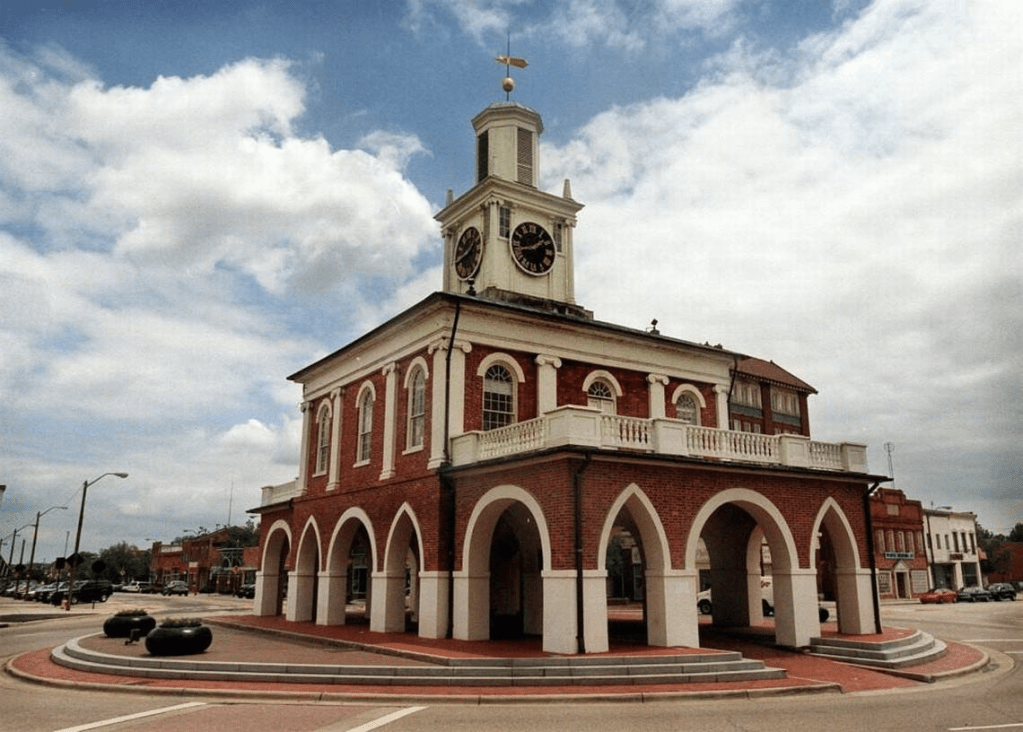
Market House, Fayetteville, NC

The past three and a half years have proved to be banner years for overt racism in this country. While racism clearly existed prior to that time and, unfortunately, will continue on into the future, this recent period has ushered in its own pandemic of vitriolic poison reflective of former times when lynching was a regular occurrence and Black men, in particular, could be railroaded into dubious situations resulting in their deaths. In response, Black parents continue to preach their litany of self-preservation to their sons and daughters regarding what to and what not to do when accosted by the police, although law enforcement is not the only offender. Recent times have seen other “citizen” racist monsters openly engaged in heinous crimes that had been left collecting dust in their mental barns and forgotten by many of the rest of us, once again asserting their right to open the barn door to accuse, attack and kill Black people with no provocation and without remorse or condemnation. The damning accusatory factor becomes your black skin.

In the turbulent aftermath of a multitude of such aggressive racist acts as the murder of George Floyd, we often find ourselves seeking retribution and compensation to demonstrate our collective self-worth or to somehow appease the departed spirit, consequentially and regrettably making hasty actions that nullify our on-going cause. It becomes challenging to sort out a right action or right causes to embrace. What to do. Where to turn.

Without a doubt we are witnessing a time of change. We have lived through enslavement, Reconstruction, Jim Crow segregation, massacres in our own independent communities such as Tulsa, civil rights struggles, and are now facing a resurrection of the genocidal extermination of individual lives and liberty. It is no wonder that many would strike back by demanding the removal of anything having any semblance of acknowledgement to that ignominious past. However, we must be careful in our choice of action, lest we remove or destroy the evidence.

Young people in particular are calling for the removal of statues in various places. At times, the civic response is to abruptly respond; in others, there is much foot-dragging and pontification about the rights of the descendants of the criminals to continue to honor and revere their ancestors in public spaces. The civic response sometimes comes genuinely, but most often it comes to prevent damage to their precious memories or to appease those whom they know have a right to protest in order to prevent additional damage. The removal of statues is a just cause because these were constructed to glorify the criminals and to provoke fear and submission in the minds and hearts of Black people. The work being done in this area is laudable.

Yet others are also calling for removal of remnants of a past history that lay bare the crime. As we have become emboldened by our efforts and successes with statues, auction blocks such as Market House in Fayetteville, NC, for example, are now a target of our interest. It is here that I would caution Black people to stop and examine what this action entails.

The auction block, the dock where our ancestors landed, a plantation site, a cabin, a work tool, a restraint, a gravesite, all are a part of the evidence of the crime. These should never be destroyed and should instead remain as lasting reminders of the crimes to be actively used as tools of instruction in our struggle and for the proper education of our youth. They should remain as perpetual signals to continually examine the long-lasting effects of the crime. Monuments must be memorialized and catalogued so that those who come behind us are made more fully aware of the extent of the crime. Of what value to us is it if we collaborate in erasing our history? For if it is not there for us to study, we will assume that it did not exist, nor will we be able to discern its connection to the conditions of people of African descent in our lifetimes.

Instead, we must make valiant efforts in every village and hamlet, every city and town to ensure that our story remains visible to be told. I encourage those who are most affected to resist all efforts to destroy the evidence of the brutality of slavery, else the detective who follows us in 100 years will not know that a crime was ever committed in this place.